martes, 29 de septiembre de 2026

THE BLACK HOLE
THE BLACK HOLE
1. First or Second
Conditional?
Read the sentences about
the man and the film.
Write:
- FIRST
– Real possibility - SECOND
– Hypothetical / imaginary situation
1.If the man uses the black hole again, he will get into trouble.___________________
2.If the man were more honest, he would not steal the money. __________________
3.If the black hole appears again, he will use it. __________________
4.If the man had a black hole at home, he would us it all the time. __________________
5.If the man is careful, he will not get caught.__________________
6. If he were not so greedy, he would use the black hole to help someone else. __________________
2. What if you came across a black hole?
Can you imagine what you would do? Look at the different scenarios and write 5 hypothetical sentences.
Choose 5 ideas from the list.
Money travel help go make disappear escape joke change explore meet steal
If I came across a black hole at home…
If I came across a black hole at school…
If I came across a black hole in the street…
If I came across a black hole …
If I came across a black hole …
3. What could happen next?
Can you imagine what could
happen next in the story? Imagine different hypothetical situations and write what the consequences would be.
Use the Second Conditional.
Example:
man / get stuck in the safe / whole weekend
→ If the man got stuck in the safe for the whole weekend, he would __________________________.
black hole become bigger /someone find the black hole/ man use the black hole one more time/
your own idea
jueves, 17 de septiembre de 2026

martes, 15 de septiembre de 2026
REVISION: Back to Basics (1) Verb BE

El verbo be
El verbo be es muy especial. En español puede significar ser o estar. Además, es diferente de los demás verbos porque en presente tiene tres formas:
AM IS ARE
| Persona | Verbo |
|---|---|
| I (yo) | am |
| You (vos/ustedes) | are |
| He (él) | is |
| She (ella) | is |
| It (eso/ello) | is |
| We (nosotros/as) | are |
| They (ellos/as) | are |
Ejemplos:
I am a teacher. → Yo soy profesor/a.
She is happy. → Ella está feliz.
We are from Argentina. → Nosotros somos de Argentina.
They are at school. → Ellos están en la escuela.
Usamos el verbo be para hablar de:
quiénes somos → I am Denise.
profesiones → He is a doctor.
edad → She is ten.
nacionalidad → They are Brazilian.
emociones y estados → I am tired.
lugares → We are at home.
Preguntas con el verbo be
Para hacer preguntas con el verbo be, cambiamos el orden:
Verbo + sujeto + complemento
- You are a student. → Are you a student?
- She is at home. → Is she at home?
- They are tired. → Are they tired?
Question Words (Palabras para preguntar)
| Inglés | Español |
| What | Qué / Cuál |
| Who | Quién |
| Where | Dónde |
| When | Cuándo |
| How | Cómo |
| How old | Cuántos años |
| Why | Por qué |
Ejemplos:
- What is your name? → ¿Cuál es tu nombre?
- Who is your English teacher? → ¿Quién es tu profesor/a de inglés?
- Where are you from? → ¿De dónde sos?
- When is your birthday? → ¿Cuándo es tu cumpleaños?
- How are you? → ¿Cómo estás?
- How old are you? → ¿Cuántos años tenés?
- Why are you sad? → ¿Por qué estás triste?


THE PASSIVE VOICE IS EVERYWHERE!Quote Hunt & Poster Project Discover how the passive voice is used in real quotations! Work in pairs o...

-
Last night, I had a strange dream. I was walking in a forest when I saw a dog. The dog was barking and I felt scared. I ran away, but I fel...
-
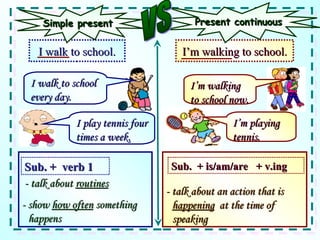
Present simple 1 Habits or situations that happen regularly. I wash my hair every day. I never go to the library. She ‘s always late. ...


